
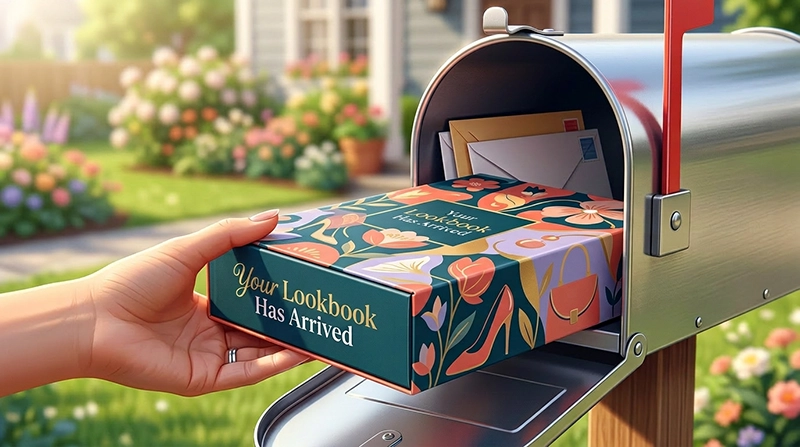
In a world of overflowing inboxes and fleeting social feeds, a physical piece of mail still commands attention like nothing else. This guide explores the creative formats, smart personalization tools, and measurable tactics that make direct mail one of the highest-ROI channels available to modern marketers.
73% of consumers prefer receiving brand communications by mail – USPS Household Diary Study, 2024 | 5.3% average response rate for house lists versus 0.6% for email – ANA/DMA Response Rate Report, 2024 | 91%+ of promotional mail is read and opened – Postalytics / Industry Data, 2024 | 4+ weeks 75% of business mail stays in the home, revisited an average of 5 times – MarketReach, 2020 |
Direct Mail Creative Formats
Postcards: From Small to Statement-Making
The postcard is the workhorse of direct mail, fast to produce, affordable to mail, and impossible to ignore because there’s no envelope to open. But “postcard” covers far more creative territory than most marketers realize:
- Standard — 4″ × 6″
Lowest postage rate. Perfect for promotions, reminders, and event announcements. - Large — 5.5″ × 8.5″
More creative space. Ideal for product showcases, real estate listings, and menus. - Jumbo — 6″ × 9″
Stands out in the stack. A top performer for retail, automotive, and healthcare. - Jumbo XL — 6″ × 11″
Maximum billboard impact. Grabs the eye before any other piece in the mailbox. - Oversize — 8.5″ × 11″
Letter-size mail with postcard economics. Loads of room for offers and imagery. - Tri-fold Mailer — up to 8.5″ × 14″
Self-mailer that opens like a brochure. Perfect for multi-product or tiered offers.
Bigger isn’t always better, but in a stack of standard envelopes, a 6×11 jumbo postcard printed full-bleed on both sides is practically its own billboard. The format should match the message: a quick appointment reminder is a 4×6; a grand opening deserves a 6×11. Rates vary depending on mailing options.
Non-Profit Mailings
Non-profits and civic organizations have long known that a thoughtful, well-crafted piece of mail can move people in a way that a digital ad simply cannot:
- The Appeal Letter Package
A personalized and honest letter from leadership, mailed in a #10 envelope with a remittance envelope, is a tried-and-true way to communicate your mission to many prospects. With a targeted list by demographics or previous donors, you don’t waste valuable money on mailing to uninterested parties. - The impact report mailer
A 4-panel self-mailer quickly highlights your event, with QR code or a detachable RSVP card for event registration or donation, makes it easy. Renewing an existing donor costs a fraction of acquiring a new one. - Continued Communication
A monthly or quarterly newsletter or magazine filled with past accomplishments, success stories, humble thanks to volunteers and doners, and an outline of future initiatives keep people engaged in your mission. Include a donor card insert and a QR code for easy access to making donations or getting involved.
Lumpy Mail — When the Package IS the Message
“Lumpy mail” is the industry term for any mailing that isn’t flat, for instance, packages, tubes, boxes, and padded envelopes. They have a near-100% open rate — nobody throws away a box without opening it first:
Examples:
Dimensional mailers: A box or tube containing a product sample, branded item, or creative prop tied directly to your message. Pro: High impact.
Posters & Fine Prints: Mailing tubes can hold all kinds of surprises and are sure to be opened. Event posters, promo products, and even fine prints mailed to biggest clients can be collectable piece that when branded will be kept over time. Pro: Long shelf life.
Promo Packets — A company introductory pack with brochure, business card, branded notepad and pen, and a coupon card. Feels more like a gift than a random solicitation. Useful items remain in view keeping your brand top-of-mind for a very long time. Pro: Multi-touch.
Catalogs & Lookbooks — Saddle-stitched, spiral or perfect-bound, catalogs and lookbooks are back. Tangible, easily retrievable, with a longer life span in a business or home. Printed with specialty finishes can add texture to photos or covers, enhancing the overall browsing experience. Pro: Browsable anytime.
Swatchbooks — Physical material samples for home goods, flooring, apparel, or print. Boxed or packaged individually, samples allow consumers to touch and test products in their home before purchasing. Tactile, product in-hand
Pop-up mailers — Die-cut pieces that spring into 3D when opened. Memorable, shareable, and almost always photographed to share on social. Pro: Viral worthy.
Lumpy mail costs more per piece, but it’s designed for high-value prospect lists, VIP client retention, and B2B sales where a single conversion justifies the spend.
Smart Personalization & Targeting Techniques
Variable data printing (VDP)
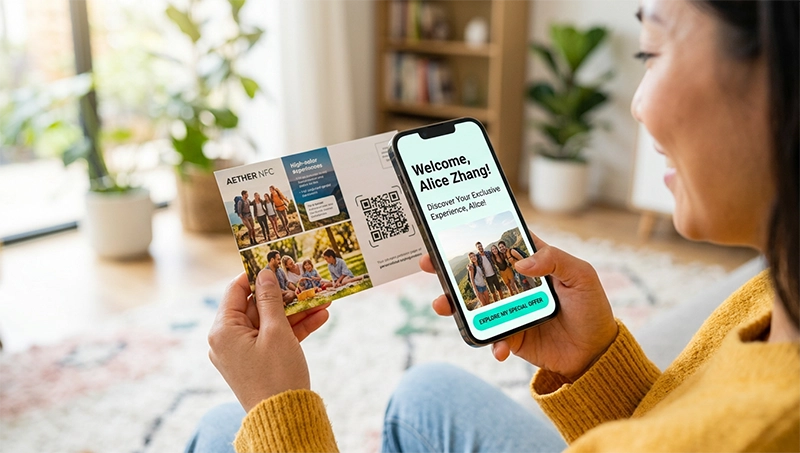
Using variable data means every single piece in your mailing can be unique: a different name, image, offer, or message, all produced in a single press run at no extra time cost.
What can vary
Recipient name, company, purchase history, last visit date, neighborhood, preferred products, offer amount, imagery, even the color scheme; all driven by your customer data.
Why it works
Adding just a name to a mailer increases response rates by 135%. A piece referencing someone’s last visit or favorite product doesn’t feel like junk mail, it feels like a conversation. (Postalytics, 2024)
What you need
A clean, segmented customer data file and a template designed with variable fields built in. Your print provider handles the merge. The more data you bring, the more powerful the output.
Targeted Mailing Lists — Mail smarter, not broader
The list is the single most important variable in any direct mail campaign. A brilliant design mailed to the wrong people is money wasted. A mediocre design mailed to a precisely targeted list will outperform every time.
- Demographic targeting: Filter by age, household income, homeownership, family size, length of residence, and hundreds of other consumer attributes.
- Behavioral data: Target people who recently moved, had a baby, applied for a mortgage, or purchased a competitor’s product.
- Your house list: Past customers are your most valuable audience. Segment by recency and value. Suppress recent purchasers, and create a re-engagement campaigns for lapsed customers.
EDDM
Every Door Direct Mail lets you reach every household on a carrier route with no list purchase needed. Ideal for local businesses: restaurants, gyms, chiropractors, real estate agents.
QR Codes + Personalized Landing Pages
The bridge between your printed piece and your digital campaign is a QR code. When combined with a personalized URL (pURL), it becomes one of the most powerful measurements and conversion tools in marketing.
Each person receives their own unique QR code pointing to their own personalized URL. Every visit is tracked individually – this is direct mail with full digital attribution. In fact, 82% of direct mail marketers who track response rates are already using QR codes or unique URLs as their primary method. (Postalytics, 2024)
Tracking Delivery & Measuring What Works
One of the most common objections to direct mail is that you can’t measure it; it was a dead-end street. That’s no longer true. Modern direct mail campaigns offer analytics comparable to digital channels and removes those blind-spots.
| Tool | What it tracks | Best for |
| Intelligent Mail Barcode (IMb) | Real-time in-transit scans showing when mail entered the stream and delivered by zip or route. | Campaign timing. Knowing when to expect calls, web visits, and responses. |
| Unique/Dynamic QR Code analytics | Scan Volume, locations, device data, timestamps. Use UTM link parameters on your dynamic URL and track activity through Google Analytics – Dynamic QR Code URLs and UTM data can be changed and reused in your next campaign. | Getting insights to what locations responded the most. Also, connecting recipients to digital behavior and sales outcomes. |
| Personalized URLs (pURLs) | Every visit tied to a named recipient in your data file and links to a personalized landing page. | B2B campaigns where knowing which contact engaged is critical. |
| Call tracking numbers | Unique phone numbers per campaign log which piece drove each call. | Service businesses, healthcare, legal or anywhere phone response is primary. |
Combine delivery tracking with QR scan data and you can calculate exact response rates, cost per response, and revenue per piece mailed – the same metrics you’d demand from any digital campaign.
Direct mail isn’t competing with digital marketing, it’s completing it. The brands seeing the strongest results today are those using physical mail as the anchor that drives recipients into their digital experience: a scan, a visit, a call, a purchase. The format is timeless. The tools to measure it have finally caught up.
Ready to put a campaign together? We handle everything from creative and printing through list procurement, and mailing. Let’s talk about what your next mailer could accomplish for your business.
Contact Our Team and Learn More:
616.248.4110
customerservice@foremostgraphics.com
Sources:
- USPS Household Diary Study (2024) — consumer preference for mail communications
- ANA / DMA Response Rate Report (2023–2024) — direct mail vs. email response rates
- Postalytics Direct Mail Statistics (2024) — open/read rates; QR tracking adoption; personalization lift
- MarketReach (2020) — mail dwell time and revisit frequency in the home
- Lob / CompereMedia: 2024 State of Direct Mail Consumer Insights — consumer engagement behavior
- In coordination with Claude AI and Adobe Firefly AI