
If you’ve ever opened a supply closet and found three outdated versions of the same sales sheet, you already know the problem. Print inventory has a way of piling up, going stale, and quietly draining budgets long before anyone notices.
This is just one of the many scenarios Foremost Graphics builds POD storefronts to help change.
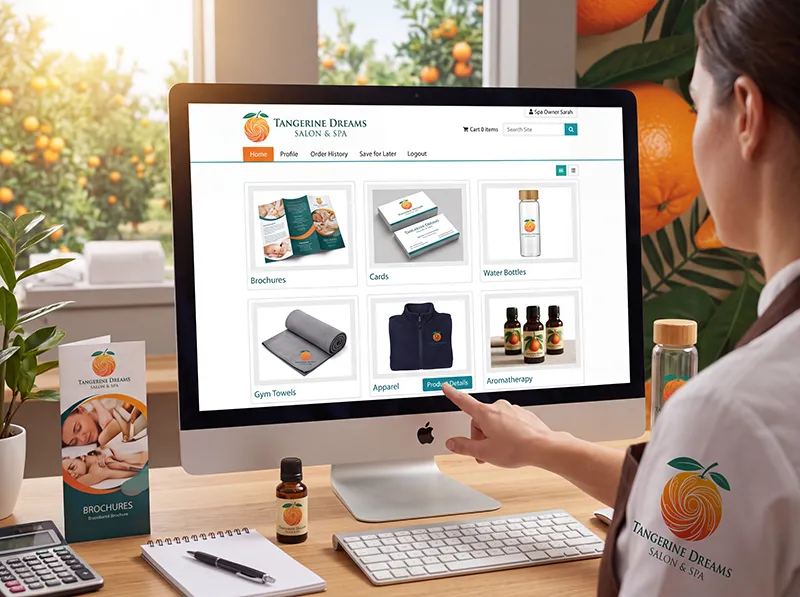
A POD storefront is an online portal where your team, franchisees, or branch locations can log in, browse approved marketing and operational materials, and order exactly what they need, when they need it. No more guessing how much to print. No more warehouses full of assets with outdated logos. No more “wait, which version are we supposed to be using?”
Here’s what all that actually looks like in practice, and why it matters for businesses juggling multiple locations, teams, or partners.
What Pain Points Does a POD Storefront Actually Solve
POD storefronts aren’t just an ordering portal; they’re an inventory and brand-control system dressed up as one. The core benefits break down into a few key areas:
- Print-on-demand, not print-and-hope. Materials are printed only when an order comes in, which means you’re never sitting on a pallet of collateral that goes obsolete the moment your pricing or design changes happen.
- One source of truth. Every file is a template and lives in a single, centralized platform. When headquarters updates a brochure, every location automatically orders from the same current version.
- 24/7 self-service ordering. Sales reps, branch managers, or franchise owners can log in any time and reorder what they need without waiting on a call or email to your team.
- Personalization at scale. Variable data printing means a single template can be personalized with a rep’s name, branch address, or local contact info, without creating a hundred separate files.
- Smarter inventory management. Real usage data tells you what’s being ordered, so you stop guessing at print runs and stop paying to store things that will not get used.
- Simplified, flexible shipping. Orders can ship directly to individual locations, new hires, event sites, or customers; no internal redistribution required.
- Fulfillment built in. Kitting, pick-and-pack, and drop-ship logistics happen on the back end, so your team isn’t stuffing boxes.
What Typically Lives on a POD Storefront
Once a business sets one up, it usually becomes home to more than they expected:
- Marketing collateral and sales sheets
- Personalized sales materials
- Training manuals
- Product catalogs
- Store Merchandising materials
- Trade show or a sponsored event promotional kits
- Direct mail pieces
- Promotional items and branded apparel
- Onboarding and welcome kits
- Internal forms — POs, inspection sheets, and other operational documents
Basically: anything that gets reordered repeatedly, needs to stay current, or gets distributed across more than one location.
Who This Actually Helps
Healthcare Organizations
A multi-clinic healthcare group needs patient intake forms, HIPAA notices, and wellness brochures identical at every location, with zero room for an outdated compliance document slipping through. A storefront locks every clinic into the current approved version while letting front-desk staff reorder forms in small batches and ship them to locations, instead of stockpiling boxes in a supply closet.
Franchise Businesses
A franchise’s biggest print headache is usually brand consistency. Corporate wants every location using the same signage, menu inserts, and promo materials — but individual franchise owners want the ability to order only what their location needs, on their own timeline. A storefront gives corporate control over approved assets while giving owners the independence to self-serve.
Schools and School Districts
Districts juggle registration packets, handbooks, athletic materials, and event flyers across dozens of buildings, often with a small central office staff managing it all. A storefront lets individual schools order their own materials on demand, without every request routing through one overworked administrator, and without a district office storing pallets of paper for schools that don’t need it yet.
Manufacturers
Manufacturers often support distributed sales teams and channel partners who all need spec sheets, catalogs, and personalized proposal materials, frequently updated as products change. A storefront keeps every rep and partner working from current specs, with variable data that personalizes materials by rep name or region, and small-quantity ordering that replaces costly, wasteful bulk print runs.
Multi-Location and Decentralized Businesses
Any organization with multiple branches, regional offices, or a lean central marketing team benefits from the same core fix: one centralized library, self-service ordering, and local shipping — without adding headcount to manage it.
Organizations Selling Promotional Merchandise
Groups that sell branded apparel or promotional products to members, alumni, or supporters can use a storefront as a built-in e-commerce and fulfillment channel, handling everything from ordering to shipping without having to build separate infrastructure.
The Bottom Line
A POD Storefront isn’t just a convenience; it’s a shift from print-and-store to print-and-ship. Businesses stop paying to warehouse guesses and start printing exactly what’s needed, when it’s needed, with every location working from the same current files.
If your team is buried in outdated inventory, fielding “which version is right?” questions, or tired of ordering in bulk when you only need a small reorder, it might be time to talk about what a POD storefront could look like for your business.
Want to see what a Print-on-Demand Storefront could do for your organization? Reach out to our team to talk through your specific print and fulfillment needs.
Email: customerservice@foremostgraphics.com
Call: 616.248.4110